
hey self-lover!
mary here!
explore podcasts:
SELF LOVE
Body-Image
Confidence
Healing
Host of the top-rated self-love podcast and author of The Gift of Self-Love & 100 Days of Self-Love.
read more


Follow me!
get it now!
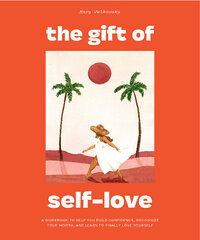
Give yourself The Gift of Self-Love, a workbook to help you build confidence, recognize your worth, and learn to finally love yourself.


Self Love Reminders for Women Who Are Ready for Healing
POSTED ON:
January 23, 2026

topic(s):
Self love isn’t a one-time epiphany; it’s a lifelong practice of coming home to yourself. True self-love is rooted in deep self-awareness — because you can’t fully love yourself without first knowing yourself.
This Best Of Mary’s Cup of Tea episode brings together some of my favorite clips about healing through self-love. My hope is that these reminders meet you exactly where you are and offer a gentle nudge to keep showing up for yourself, even when the path feels messy or uncertain.
In this episode, you’ll hear about:
- why the cure to burnout is NOT self care
- how to detach your self worth from your productivity
- tools for healing from heartbreak and breakups
- a simple trick for practicing compassionate self talk
- the power of slowing down and resting
- how to hold onto hope when everything sucks
- ways to reconnect with yourself when you feel lost
- simple, grounded ways to prioritize self love every day
- mindset shifts for self love, confidence, and knowing that you are enough
Whether you’re coming out of burnout, trying to separate your worth from your work, or putting yourself back together after heartbreak, this episode is your reminder that self-love isn’t selfish. It’s essential.
This blog post is a deeper, structured companion to that episode. If you’d rather listen, you can do so on Spotify or Apple Podcasts.
Now let’s talk about what self-love actually looks like when you’re serious about healing.
Self Love Involves Unlearning and Relearning
One thing I’ve noticed about self-love content is that it often splits into two camps.
The first camp says self love is radical self-acceptance. You don’t need to change anything. You’re enough exactly as you are.
The second camp says self love is about becoming the best version of yourself. The glow-up. The evolution. The aspirational identity.
For a long time, I felt torn between those two energies.
There are seasons when I crave rest and permission to just exist. After years of toxic self-improvement — especially around body image — I needed to not feel like a project.
And then there are other seasons when I feel ambition rise up in me. I want to chase something. I want to build something. I want to become the version of myself I can see in my imagination.
Self-love, for me, is both.
It is returning home to yourself and remembering you do not need fixing. And it is consciously creating a new sense of self.
If you’ve listened to my earlier episode on body image and self-worth, you know that self-love is less about becoming someone new and more about removing what was never truly you.
We are always unlearning and relearning.
We are unlearning diet culture and relearning how to nourish ourselves.
Unlearning shame and relearning embodiment.
Unlearning hyper-independence and relearning trust.
Unlearning hyper-codependence and relearning sovereignty.
Unlearning people-pleasing and relearning self-pleasing.
Unlearning inherited trauma and relearning who we actually are.
Self love is cyclical. Seasonal. Nuanced. It is not a destination. It is an ongoing recalibration.
Do Not Delay Your Joy
One of the most harmful myths in the self-love world is that healing has a finish line.
That one day you will be fully confident, fully healed, fully self-aware — and then you’ll finally allow yourself to feel joy.
But joy is not a reward you earn after healing.
Joy is part of healing.
Some of my happiest memories were during some of my hardest seasons.
I remember sitting on the floor of my empty apartment after a breakup. I had just moved out. I had no furniture. A friend showed up with a cheap bottle of wine and a joint. We scraped together change to afford it. We sat on a styrofoam pad and laughed harder than I have ever laughed.
I was broken. I was depressed. I was poor.
And there was joy.
I was reminded of this again when I traveled to Cuba. Despite decades of economic hardship, people were singing in the streets. Dancing. Playing domino. Laughing constantly. Joy was not denial. It was resilience.
Joy is not made to be a crumb.
No more guilty pleasures. These are entitled pleasures.
Self love includes allowing yourself to feel joy even when your life isn’t perfect. Especially then.
When Hope Feels Impossible
When it feels extra hard to access joy or hope, I turn to poetry.
Mary Oliver. Emily Dickinson. Maya Angelou. Alice Walker.
In one episode, I spoke with poet Victoria Hutchins about hope. She said something that shifted my entire understanding of emotion.
We cannot control our feelings, but we can control where we direct our attention.
If you want to feel hopeful, pay attention to things that suggest there is goodness in the world.
Attention is the beginning of devotion. And attention is the beginning of feeling.
Hope is not something you dig up. It is something you practice noticing.
Victoria read a poem called Reasons to Stick Around for a While, walking through the seasons and listing small reasons to stay. Sun on your shoulders. Gas station slushies. Leaves changing. Peanut butter eggs back on drugstore shelves.
When you’re in a dark place, “find your purpose” can feel impossible. Sometimes you just need something small to look forward to.
Sometimes self-love is as simple as giving yourself a reason to make it to tomorrow.
Stop Reacting. Start Reflecting.
We are living in an era that rewards reaction.
Social media thrives on outrage. News cycles are designed to provoke. Notifications are engineered to be irresistible. Every ping demands a response.
But self -love requires reflection.
I try to live by a mantra: I do not react. I reflect, then respond.
Reactions cause harm. Reactions are reductive. Reactions are often misplaced. Road rage is rarely about traffic. It’s usually about something that hurt earlier and never got processed.
Self-love is pausing.
Self-love is asking, “What is actually happening here?”
Slow Down If You Want Inner Peace
If you want inner peace, you must slow down.
I have this ridiculous habit of trying to beat my GPS arrival time. Siri says 22 minutes and I take it as a personal challenge to make it in 18. Why? What am I proving?
We rush in tiny ways and in existential ways. We rush through conversations. We rush through grief. We rush through healing.
But the more I rush, the more things go wrong. Smudged mascara. Spilled coffee. Red lights.
Slowing down is self-love.
Walk slower.
Speak slower.
Put a period at the end of a thought and sit in the silence.
Scroll slower and actually read what you’re consuming.
When you slow down, your nervous system recalibrates. You give yourself space to process instead of suppress.
Writing is thinking. Journaling is thinking on paper. Most problems shrink when written out. Self-love is giving yourself that space.
Your Worth Is Not Your Productivity
For years, I identified as an overachiever. High performer. Busy bee. Do-it-all girl.
Detaching my self-worth from productivity has been one of the hardest forms of self-love.
Your worth does not equal your work.
Your value does not lie in a number — not the number of tasks you completed, not the number in your bank account.
In the book 4,000 Weeks by Oliver Burkeman, he writes that productivity is a trap. Becoming more efficient just makes you more rushed. The day will never arrive when everything is under control.
You are an infinite being with finite capacity.
There will always be more you could do. But your time and energy are limited. Self-love is choosing intentionally how you spend them.
Burnout Is Biological, Not a Personal Failure
I had Amelia Nagoski on the podcast to talk about burnout. Her explanation changed everything for me.
Stress is a physiological cycle. Imagine being chased by a hippo. Your body floods with cortisol and adrenaline. Your heart pounds. Your immune system shuts down. Your muscles prepare to run.
If you escape, your body completes the stress cycle. You return to baseline.
But modern stress doesn’t end with running from hippos. It ends with emails. Deadlines. Polite smiles. Standing in line.
The stress response gets activated but never completed.
That’s burnout.
The cure for burnout is not bubble baths. It’s completing the stress cycle. Physical movement. Crying. Laughter. Human connection.
The cure for burnout is also community.
Although self-love is deeply personal, it is not meant to be practiced alone. This is something I see at my self-love retreats every single time.
Women arrive guarded. Polished. Composed.
Within hours, they are sharing stories, crying, laughing, softening.
We do not heal in isolation. We heal in community.
You need people who love you as you are, not as the optimized version of you.
Self-love is surrounding yourself with a “bubble of love” that counters the world’s expectations.
Loving Your Body Through Trauma
Ruthie Lindsay’s story on the podcast was unforgettable.
She survived a catastrophic car accident. Years later, the surgical wire in her neck broke and pierced her brain stem. She lived in debilitating pain for years. Narcotics. Survival mode. Disordered eating. Freeze state.
When she began trauma work and embodiment healing, nothing changed “on paper.” She still has metal in her neck. But her relationship with her body changed.
She stopped being her own second wound.
She began treating her body like a partner she was in relationship with. When she made mistakes, she repaired. When she spoke harshly to herself, she apologized.
Self love is not perfection. It is repair.
Your body is not your enemy. Even when it hurts, it’s still doing it’s best to keep you alive.
Purpose Is Created, Not Found
We get obsessed with finding our purpose. But purpose is subjective.
Your purpose today could be as simple as enjoying your life. Or as concrete as building generational wealth.
Purpose does not have to be grand. It just has to add meaning.
There is no right path. There is only yours for now.
When you choose one direction, you inevitably grieve the others. That grief does not mean you chose wrong.
Self love is trusting that decisions are rarely permanent. You can change your mind.
Replace FOMO with JOMO — the joy of missing out. Presence and gratitude for the reality you are currently living.
Practice Self-Care “Before”
Eat before you’re starving.
Rest before you’re exhausted.
Connect before you’re lonely.
Set boundaries before you’re resentful.
Ask for help before you’re overwhelmed.
Self-love is preventative care.
It’s the small things that keep you from burning out in a big way.
Speak to Yourself With Compassion
Instead of saying “I am a binge eater,” say “I am learning to heal my relationship with food.”
Infinitive verbs matter. Learning. Practicing. Evolving.
Be impeccable with your word.
Instead of “I hate myself,” try “I am learning to love myself.”
Compassionate self-talk is not delusional positivity. It is honest and specific.
Ask yourself Byron Katie’s questions:
Is this true?
How do I know it’s true?
Who would I be without this belief?
Self-love cannot exist without self-awareness.
Diversify Your Sources of Joy
Read books. Sing randomly. Dance in your kitchen. Play badminton competitively in your backyard. Swim without your phone. Play Scrabble. Take yourself less seriously.
Self-love is not making healing your entire personality.
It’s unpacking trauma in therapy and then laughing until you can’t breathe with your best friend.
It’s depth and lightness.
It’s serious and silly.
It’s grief and joy.
Self Love Is a Practice, Not a Destination
If there’s one thing I want women to understand about self-love, it’s this:
There is no final version of you.
There is no arrival point where you suddenly feel perfectly secure forever.
Self-love is a practice. It is something you return to.
Some days self-love looks like setting a boundary.
Some days it looks like laughing on the floor.
Some days it looks like journaling.
Some days it looks like doing nothing at all.
Self-love is not about becoming impressive.
It’s about becoming honest.
And honesty is where healing begins.
✨ Deepen your self love journey with the full episodes featured:
- #237: 7 Self-Love Lessons I’m Taking Into My 27th Birthday
- #243: How to stay hopeful, soulful, and joyful with Victoria Hutchins
- #217: The Mistake We Make with Self-Love
- #180: Detaching Self-Worth from Productivity
- #138: Healing from Heartbreak
- #223: Dear Mary, how do I know if I’m on the right path?
- How to Love Yourself Through Trauma, Grief, and Chronic Pain
- Ep. 177: The Power of Slowing Down
- Ep. 209: The Cure for Burnout is Not Self-Care with Amelia Nagoski
- Ep. 156: Compassionate Self Talk
- #212: How To Be Honest with Yourself
- #122: Your Self-Love Survival Guide for When Everything Sucks
- #186: 5 Habits that Have Made Me a Better Person
Listen to the other episodes in this Best of Mary’s Cup of Tea Series:
- Eating Disorder Recovery Tools for Women Who Are DONE with Diet Culture
- Body Love & Self Worth for Women Who Hate Beauty Standards
- Female Friendships Advice for Women Who Crave Deeper Connection
- Healthy Relationship Advice for Women Who Value Love That Lasts
- Powerful Mental Health & Mindset Shifts for Women Who Feel Lost
- Confidence Practices for Women Who Want to Trust Themselves Again
- Self Love Reminders for Women Who Are Ready for Healing
Dive into Mary’s self love books:
- The Gift of Self-Love, an interactive workbook to help you build confidence, recognize your worth, and learn to finally love yourself.
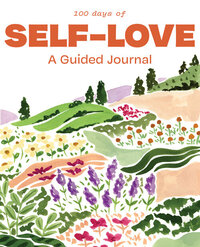
- 100 Days of Self-Love, a guided journal with 100 prompts for calming self-criticism and learning to love yourself.
Follow Mary on IG: @maryscupofteaa and @maryspodcast
If you’re enjoying our self love podcast, share it with the women in your life to continue spreading the self love tea!
Hope you enjoyed this episode of Mary’s Cup of Tea: the Self-Love Podcast for Women.
Related
< back to the mary's cup of tea podcast


TERMS OF SERVICE | COPYRIGHT © 2025 MARY'S CUP OF TEA LLC. | web design BY YOURDESIGNERASH
snoop around
2 ways to show yourself more love:
get the book!
hello self-lover! i'm mary!
Host of the top-rated self-love podcast, author of The Gift of Self-Love + 100 Days of Self-Love, and worldwide retreat leader. So happy you're here. :)



follow along
listen to the pod:
stay connected: